

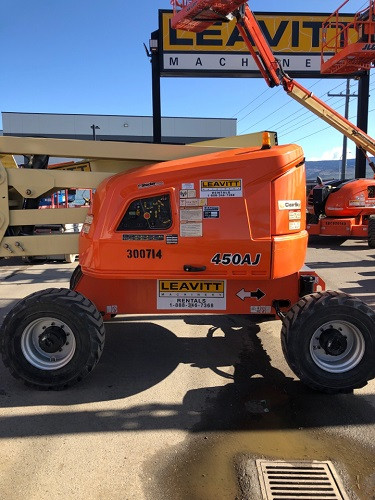


Within the crane industry, the all-terrain crane is a luxury type of a mobile hydraulic crane. The reputation of this particular crane is similar to driving a Hummer or a Range Rover on pavement. All-terrain cranes are considered to be a hybrid between a mobile truck crane and rough terrain crane. Another remarkable quality of this equipment is its multi-functional ability to be able to navigate through all kinds of off-road terrain. Amongst the main selling features of this particular crane is that it travels equally well at top speeds down roads.
The First Rough Terrain Crane
Grove launched the first rough terrain crane to the market in the year 1959. The crane was designed for the intended application of being a multi-purpose machinery for use on construction locations. The crane's tires have the industrial strength which is capable of handling all kinds of difficult terrain and can transport small loads in carry mode. During the 1970s, Grove introduced the 4 axle Super-RT 1650 model. This particular unit has an 82.8 meter or 270 foot height under hook in production, along with a 135 ton lifting capacity. At the end of the day, the rough terrain crane would become the company's most notable machine over the years.
The Crane's Disadvantages
The rough terrain crane is not without its drawbacks since it is not able to be driven on public highways with any other traffic. Japan is the one country that has made this rule an exception. Moreover, one more problem occurred when the lowered boom on the crane tended to block the driver's left and right views, depending upon how the cap was positioned. These issues with the crane's design ended up being both hazardous and serious and lead to numerous RT crane mishaps, specially when turning. Thus, lowboys, flatbeds, low-loaders were used as the primary means of moving rough terrain cranes.